
Palm Beach Gardens, FL · Garage Door Service
Why Waiting on a Garage Door Here Costs More Than It Looks Like
Most Palm Beach Gardens garage doors date to the 1960s-70s building boom near the coast. Here's what that age and the salt air actually do to springs and tracks.
- Repairs & new doors
- Springs & openers
- Serving 8 nearby communities
Doing Nothing For Now
The median home in this part of Palm Beach Gardens went up around 1977, and the broader housing stock here runs from 1965 to 2021, with most of it concentrated in the 1960s and 70s across the 18 named areas that make up the city. That matters because a door that age is usually carrying its original torsion spring, original track, and often the original opener motor. Doing nothing isn't neutral here. A spring built in 1977 has already outlived its rated cycle count by a wide margin, and the steel doesn't announce it's about to let go. It just goes. With 35,974 owner-occupied houses in the service area and a median household income of $75,880, most owners could afford to swap a spring before it fails. Plenty don't, because the door still opens fine right up until the morning it doesn't. Deferring the job isn't a judgment call you can make by looking at the door from the driveway. It's a call you make by knowing roughly how old the hardware is and what fifty years of cycles does to it.
How Local Conditions Play In
Palm Beach Gardens sits in a mild temperate band, so the springs and tracks on these doors aren't fighting freeze-thaw cracking or ice-jammed rollers the way doors further north do. That's not a problem you have. What you have instead is humidity and salt. With Juno Beach and Palm Beach Shores both inside ten miles, and the ocean never far from any part of this city, the air carries salt inland on a regular basis. That salt works into galvanized spring coils, hinge pins, and track bolts, and it does it steadily, not in one dramatic event. A spring here can look fine on the outside and still be pitted on the inside of the coil where you can't see it. Rust doesn't need a freeze to start - it needs moisture sitting on bare or worn metal, and that's a daily condition here, not a seasonal one. If your hardware is original to a house built in the 60s or 70s, it has had four or five decades of that exposure, which is a different kind of wear than a dry inland climate would produce on the same-age door.
Checking It Yourself
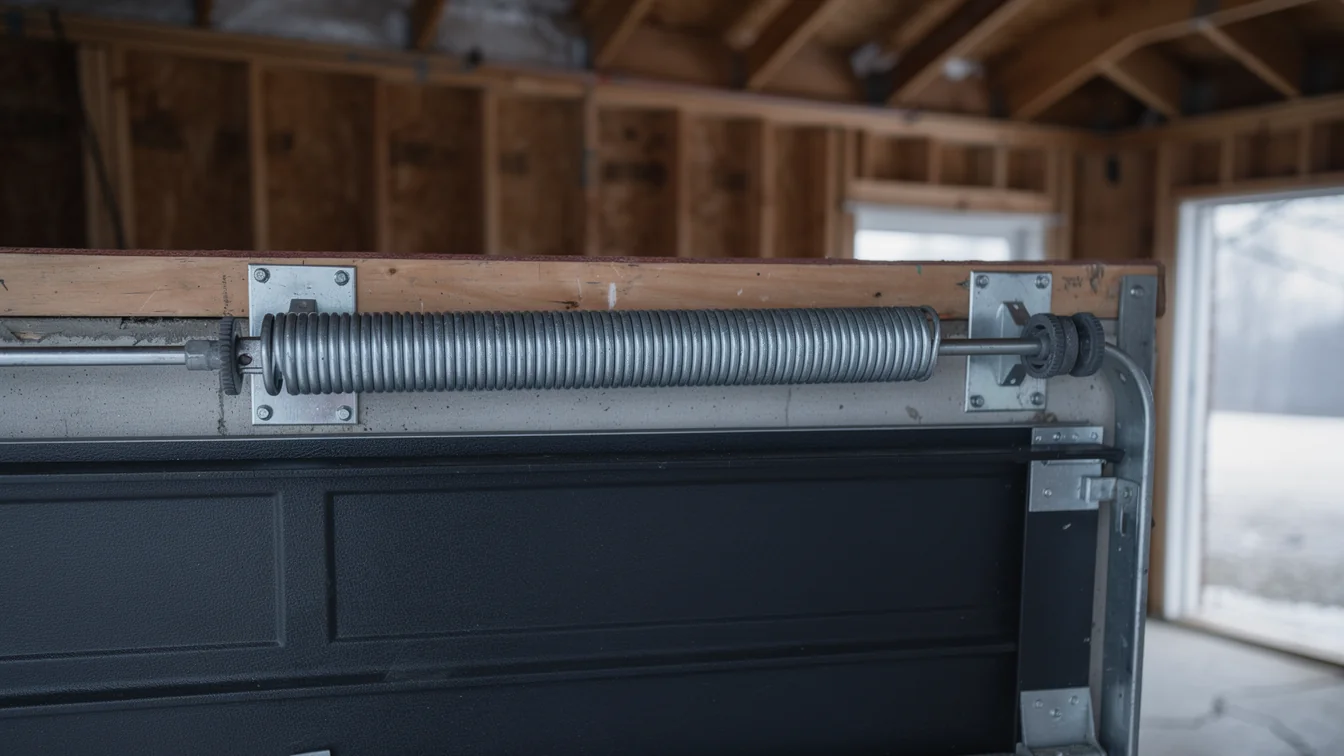
You can look at a few things without a ladder or a wrench. Stand the door open halfway and look at the torsion spring above the header - if you see rust flaking off in small orange chips, or the coils look pitted rather than smooth, that's salt-air corrosion doing its work, and it's worse than it looks from the floor. Run a finger along the horizontal track where it bolts to the wall; if the bolts are rusted to the point the heads are rounding off, the mounting hardware is as old as the spring. Listen for the door on its way up - a grinding or popping sound near the top of the track usually means a roller has worn through its bearing, common on original 60s and 70s rollers that were never replaced. What you shouldn't do is touch the spring itself, loosen the set screws, or try to adjust tension. A wound torsion spring under load has put people in the hospital. Looking and listening is fine. Opening it up isn't a homeowner job.
The Problem
The actual failure point on a lot of these doors isn't the spring snapping cleanly - it's the cable fraying because the spring has already lost tension and the cable is taking load it wasn't built to carry alone. By the time that cable lets go, the door can drop hard and fast, and if anyone's hand or a car is under it, that's a real injury, not a theoretical one. We're honest that we can't always get a replacement spring in the exact size and wind for an older door the same day - some of the original hardware from the 60s and 70s isn't a stock size anymore, and that part sometimes has to be ordered. If your door is original to a house from that era and you've noticed rust on the spring or slack in the cable, that's not a wait-and-see situation. It's worth a call before the door picks the time for you.
Frequently asked questions
How old is garage door hardware likely to be in a Palm Beach Gardens house built in the 60s or 70s?
If the house hasn't had a door replacement on record, the spring, track, and opener are probably original to the build. Given the median build year here is around 1977, that puts a lot of hardware in this city at 45 to 50-plus years old, well past any reasonable spring life.
Does the coastal air really affect garage door springs this far inland?
Yes. Palm Beach Gardens is within ten miles of the coast on multiple sides, including Juno Beach and Palm Beach Shores, and salt-laden air travels well beyond the waterline. It settles on exposed steel daily, which speeds up corrosion on uncoated or worn spring coils and track hardware.
Is it ever fine to just keep an old spring going?
Sometimes, if it's not visibly rusted or pitted and the door is still balancing evenly. But a spring from the 1960s or 70s has almost always outlived its cycle rating, and corrosion from this area's humidity usually means the coil is weaker than it looks from the outside.
Can I replace the spring myself to save money?
We'd advise against it. A wound torsion spring holds enough stored force to cause serious injury if it's released wrong, and matching the correct wire size and wind direction on an older door isn't something to guess at. This is one job worth calling for.
Related garage door services in Palm Beach Gardens
More garage door guides
Book garage door service in Palm Beach Gardens
Call now or request a quote - tell us what the door is doing and where you are.