
Palm Beach Gardens, FL · Garage Door Service
Why Your Garage Door Keeps Jumping the Track
A look at how Palm Beach Gardens' 1960s-70s housing stock and mild temperate climate push garage door tracks out of alignment, and what to check before calling anyone.
- Repairs & new doors
- Springs & openers
- Serving 8 nearby communities
Doing Nothing For Now
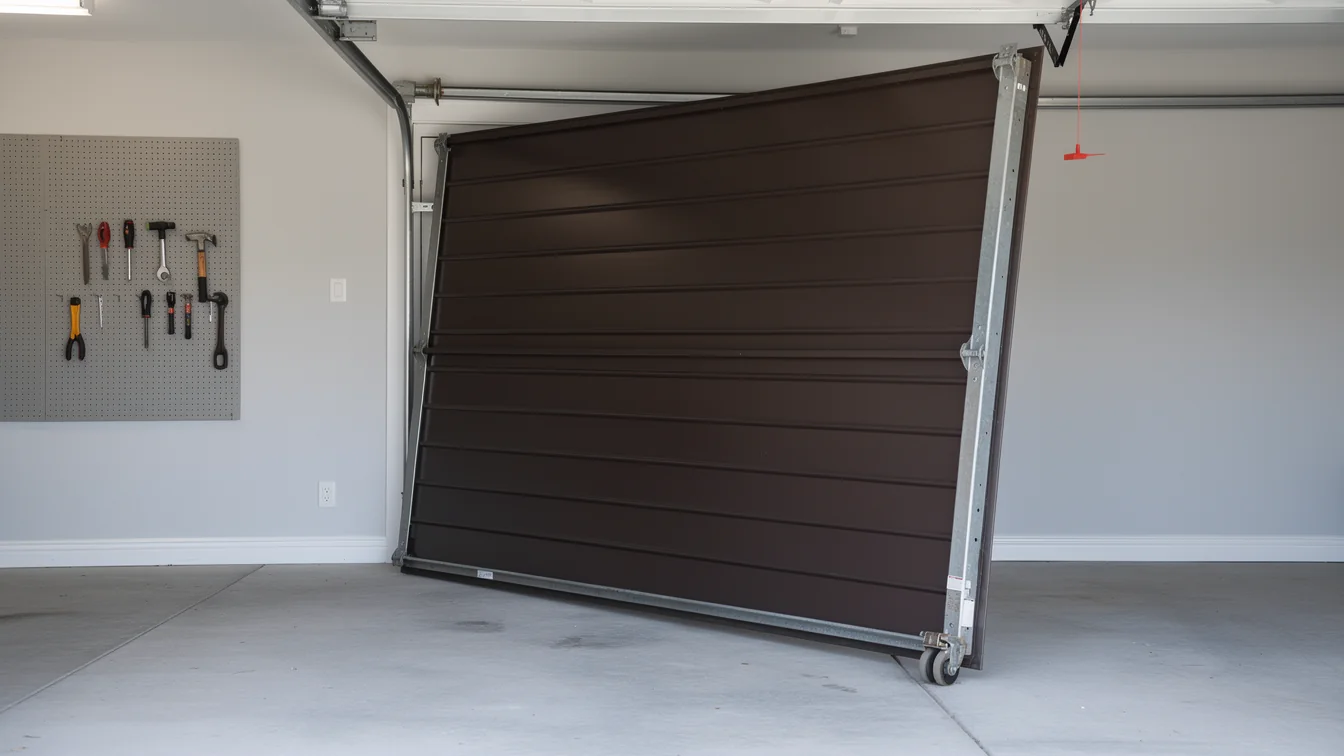
A door that rubs the track on one side, or that lurches instead of gliding, is not an emergency the first time it happens. It is, however, a sign that something has shifted, and shifting things do not correct themselves. In a lot of the houses we see across this area - homes built anywhere from 1965 up into the 2000s, with the bulk of the stock dating to the 1960s and 70s - the original track brackets were set once, by hand, and never touched again. That's fine for decades. Then a bracket works loose a sixteenth of an inch, the roller starts riding the edge of the rail instead of the center, and the door that used to run quiet starts chattering. Leaving it alone for a week or two while you watch it isn't reckless. Leaving it alone for six months while the roller chews a groove into the rail is how a $40 fix turns into a bent track and a new roller set. The honest answer is: if it's still opening and closing fully, you have some time. If it's catching, binding, or leaving a gap at the bottom corner, you don't.
How Local Conditions Play In
This region sits in a mild temperate band - no hard freezes, no frost heave pushing a slab and twisting a track out of square, which is the failure mode we'd be talking about somewhere up north. That's not our problem here. Ours is moisture. Steady humidity keeps galvanized track hardware and the little zinc-plated screws that hold the brackets in a slow, constant state of corrosion creep, even when nothing looks rusty from three feet away. On a lot of the original 1970s-era track setups still running in houses around here, that shows up first as a bracket that's a hair looser than it should be, not as visible rust. The track itself usually outlasts the fasteners holding it to the framing. So the thing that knocks a door off alignment in this climate isn't a dramatic weather event - it's years of a damp garage slowly working screws loose in wood that's been swelling and shrinking with the humidity since the house was built.
Checking It Yourself
Open the door partway and look at the gap between each roller and its track - it should be even and consistent, top to bottom, left and right. Run your hand along the vertical track sections (door closed, power to the opener disconnected first) and check that every bracket is snug against the framing; a bracket you can wiggle by hand is the one that let the track drift. Look at the horizontal track up near the ceiling too - on older installs in this area, that's often lag-bolted into framing that's flexed a little over 50-plus years of humidity cycles, and a loose lag bolt up there will tip the whole track a few degrees without you noticing from the floor. If the door only jumps the track on one side, that's almost always the side with the loose hardware, not a bent rail. Tightening a bracket is a reasonable DIY task. Forcing a bent track back into shape with a pry bar usually just moves the problem instead of fixing it.
The Problem
Most of the time a door going off track isn't one dramatic event - it's an accumulation. Loose bracket, slightly worn roller, a track that's a degree or two out of plumb, and then one day the roller finally catches the lip of the rail and pops free. In the older end of the local housing stock - homes going back to the mid-1960s that have had one or two openers and maybe a replacement door since, but the same original track - we see all three conditions stacked on top of each other more often than any single obvious cause. We don't try to straighten a track that's been bent from a derailment; bent steel wants to bend again right at the same spot, and a new section costs less than the callback. What we can't do is tell you over the phone whether your bracket is loose or your track is bent - that's a five-minute look in person, not a guess.
Frequently asked questions
Can I fix a garage door that's off its track myself?
If a roller has simply popped out of the track and the track itself isn't bent, sometimes yes - with the door disconnected from the opener and the spring tension respected. If the track is bent or the door won't move at all, that's not a DIY repair; forcing it can snap a cable or drop the door.
Why does my garage door track keep coming loose even though it's not that old?
In this climate, steady humidity works screws and lag bolts loose in wood framing over time, even without any dramatic weather. It's a slow creep, not a single event, which is why a bracket that was fine last year can be the one that lets go this year.
Does the age of my house matter for this kind of problem?
Yes. A lot of houses in this area date from the 1960s and 70s, and many still have original or long-serving track hardware. Decades of bracket and fastener wear catch up eventually, even in a climate with no frost heave to blame.
Is a bent track ever worth straightening instead of replacing?
Generally no. Steel that's bent once tends to re-bend at the same point under load, so you'd be paying labor now and likely again later. A new track section is usually the cheaper long-run fix.
Related garage door services in Palm Beach Gardens
More garage door guides
Book garage door service in Palm Beach Gardens
Call now or request a quote - tell us what the door is doing and where you are.